When we no longer have the words.
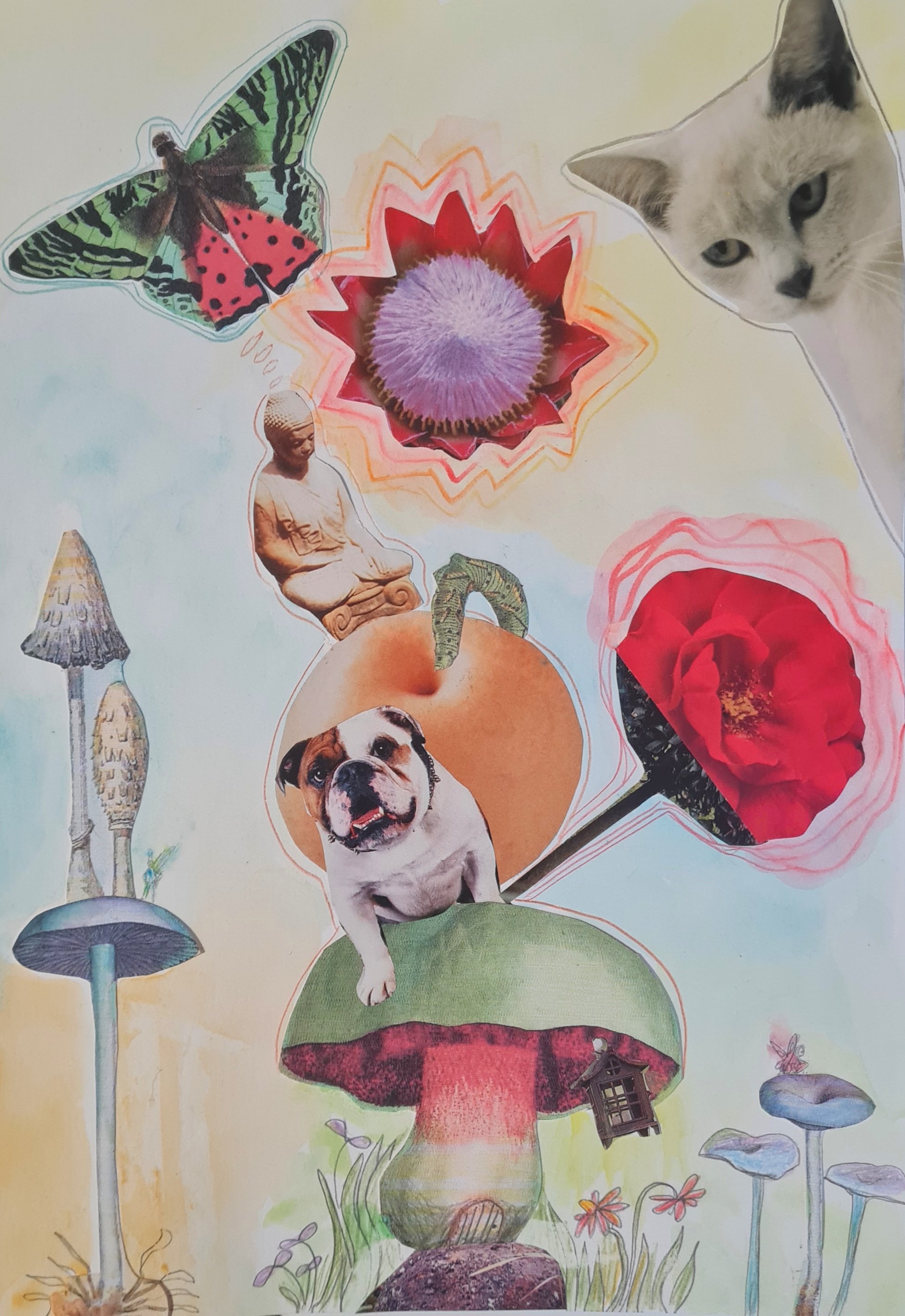
In aged care, navigating the complex realities of dementia and late-life depression requires us to look far past traditional conversation. We need a language that meets individuals exactly where they are in the present moment—communicating with the core self, rather than relying on shifting words or fluctuating emotions.
In my creative sessions, I’ve found that collage serves as this profound, non-verbal language. It bypasses the confusion of logical speech and allows a person's inner world to speak directly.
Carl Jung championed the idea that images and symbols are the natural language of the unconscious. When we invite a participant to create a collage, the specific images they choose are rarely random. Because these choices emerge from deep within their own psyche, the artwork carries an intrinsic, symbolic meaning that belongs entirely to the creator.
But here is the most beautiful part of this work: that meaning doesn't need to be analyzed, spoken, or intellectually explained to be valid. The profound truth of the artwork is already instinctively conveyed to the participant through the process. As pioneer Shaun McNiff beautifully establishes in his book Art Heals, the creative process itself possesses an innate, traditional healing function. The simple, tactile act of making art provides an immediate sense of alignment and fulfillment—grounding participants directly in the peace of the present moment, even if they cannot articulate how or why.
To make this present-moment healing possible, true person-centred care is essential. It requires meticulously preparing materials in advance—structuring choices to provide ease of selection without causing cognitive overwhelm or distraction. By supplying the correct, tailored materials for each unique individual, we protect their energy and empower them to express their identity on their own terms.
Creating a safe space where the inner psyche can safely speak is a true privilege.